Zero-Resistance Power Transmission
VEIR is a category-defining superconducting power delivery company designed to meet the energy demands of AI.
An Intro to Superconductivity
Superconductivity is a material state in which electrical resistance in certain materials decreases to near zero at cryogenic temperatures, allowing current to flow without the resistive losses characteristic of conventional conductors such as copper or aluminum. First observed in 1911, superconductivity initially required extremely low temperatures until the discovery of high-temperature superconductors (HTS) in 1986 enabled operation at higher, more practical temperatures.
High-Temperature Superconductors (HTS)
Engineered throughout the 1990s, high temperature superconductors (HTS) are now deployed in commercial and research applications including magnetic resonance imaging (MRI), advanced rail transportation systems, fusion power research. VEIR leverages HTS materials based on REBCO (Rare Earth Barium Copper Oxide).
Key Characteristics of REBCO-Based HTS

Sub-Cooled LN₂ Operation
Operation at sub-cooled liquid nitrogen temperatures to maintain superconducting state

Coated Conductor Tape
Manufactured as coated conductor tape

Minimal Rare Earths
Requires only small quantities of rare earth elements

Mass Production
Produced at industrial scale

Global Capacity
Supported by expanding global manufacturing capacity
HTS vs. Legacy Approaches
In traditional conductors such as copper or aluminum, electrical resistance produces heat as current increases. Because this heating rises with the square of the current, it becomes a primary design constraint at high power levels, influencing conductor size, spacing, cooling requirements, and overall infrastructure footprint.
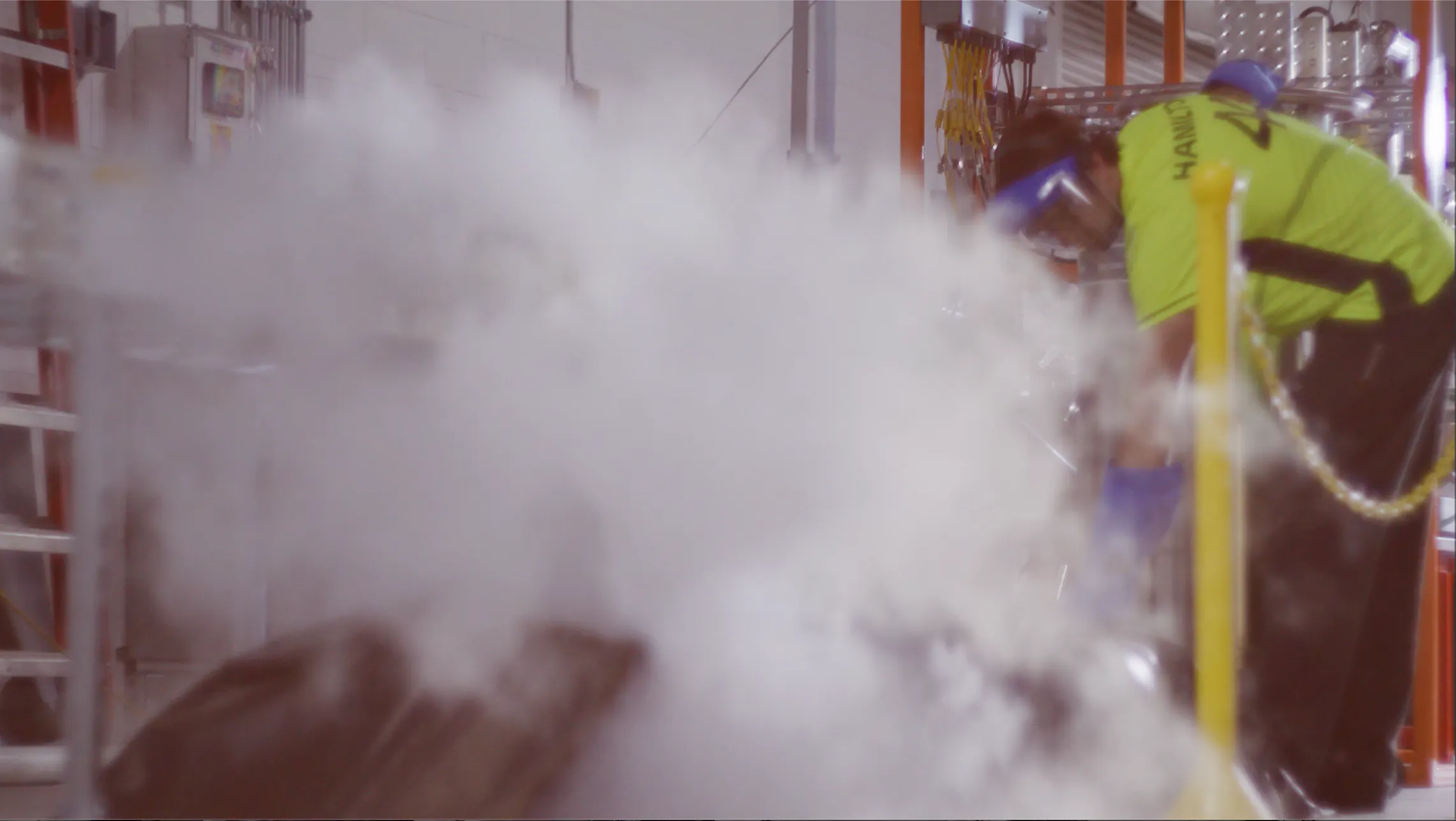
Superconducting materials behave differently. When cooled below their critical temperature, electrical resistance in the superconducting layer effectively disappears, eliminating the resistive heating that increases with current in conventional conductors.

Thermal Behavior
With resistance removed in the superconducting layer, resistive heating is eliminated and thermal performance is governed by controlled cryogenic operation.

Power Density
Higher current density enables greater power transfer within a given conductor cross-section.

Infrastructure Design
Greater power transfer in smaller conductor geometries enables more compact electrical distribution systems for high-capacity infrastructure.
Defining a New Category of Superconducting Power Infrastructure
VEIR is defining a new category of superconducting power systems enabling high-capacity power delivery at scale for next-generation high-density infrastructure, both within facilities and across the data center campus.
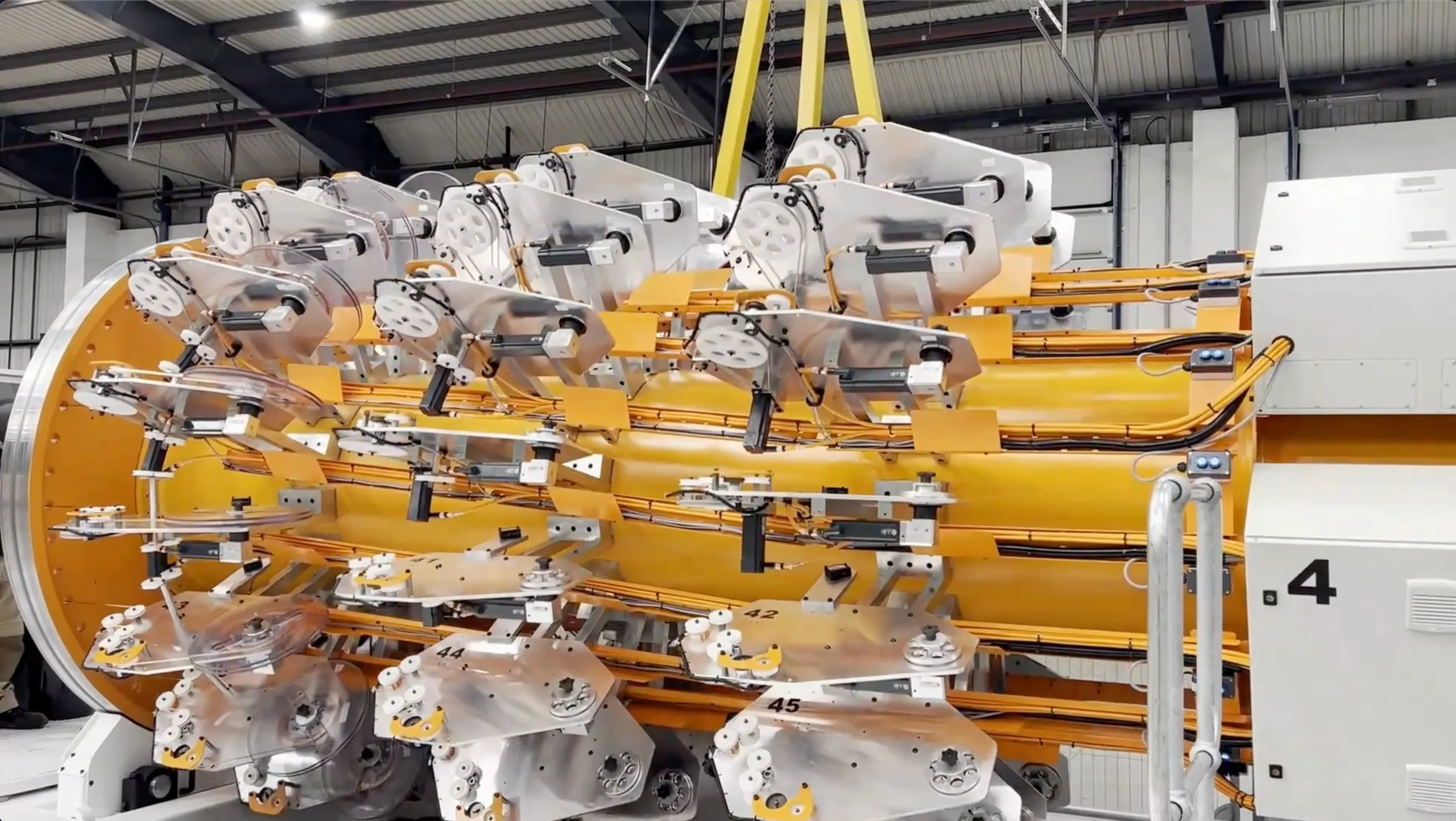
At the core of VEIR’s systems are superconducting cables manufactured at our U.S. headquarters using customized cable-winding equipment in continuous fabrication processes. Multiple HTS tapes are wound in layered geometries around a central tube to form the superconducting core. Precision winding equipment ensures the tapes are applied in controlled geometries while maintaining appropriate mechanical tension.
These superconducting cable assemblies form the foundation of VEIR’s integrated power platform, which combines cryogenic thermal management, power system interfaces, and modular architectures designed for reliable deployment in modern data center facilities.
Superconducting materials behave differently. When cooled below their critical temperature, electrical resistance in the superconducting layer effectively disappears, eliminating the resistive heating that increases with current in conventional conductors.
Inside the data center, VEIR’s low-voltage superconducting power systems replace copper busbars that generate resistive heat under load. Reductions in weight and thermal output enable higher rack density and compute performance while supporting faster deployment and improved data center economics. Across the campus, VEIR’s medium-voltage superconducting systems deliver power using a fraction of the physical space required by conventional solutions, reducing construction timelines and material costs.