Medium Voltage Solutions
VEIR’s ST Series medium voltage (MV) superconducting power delivery solution can be used for both behind-the-meter and grid connection applications.
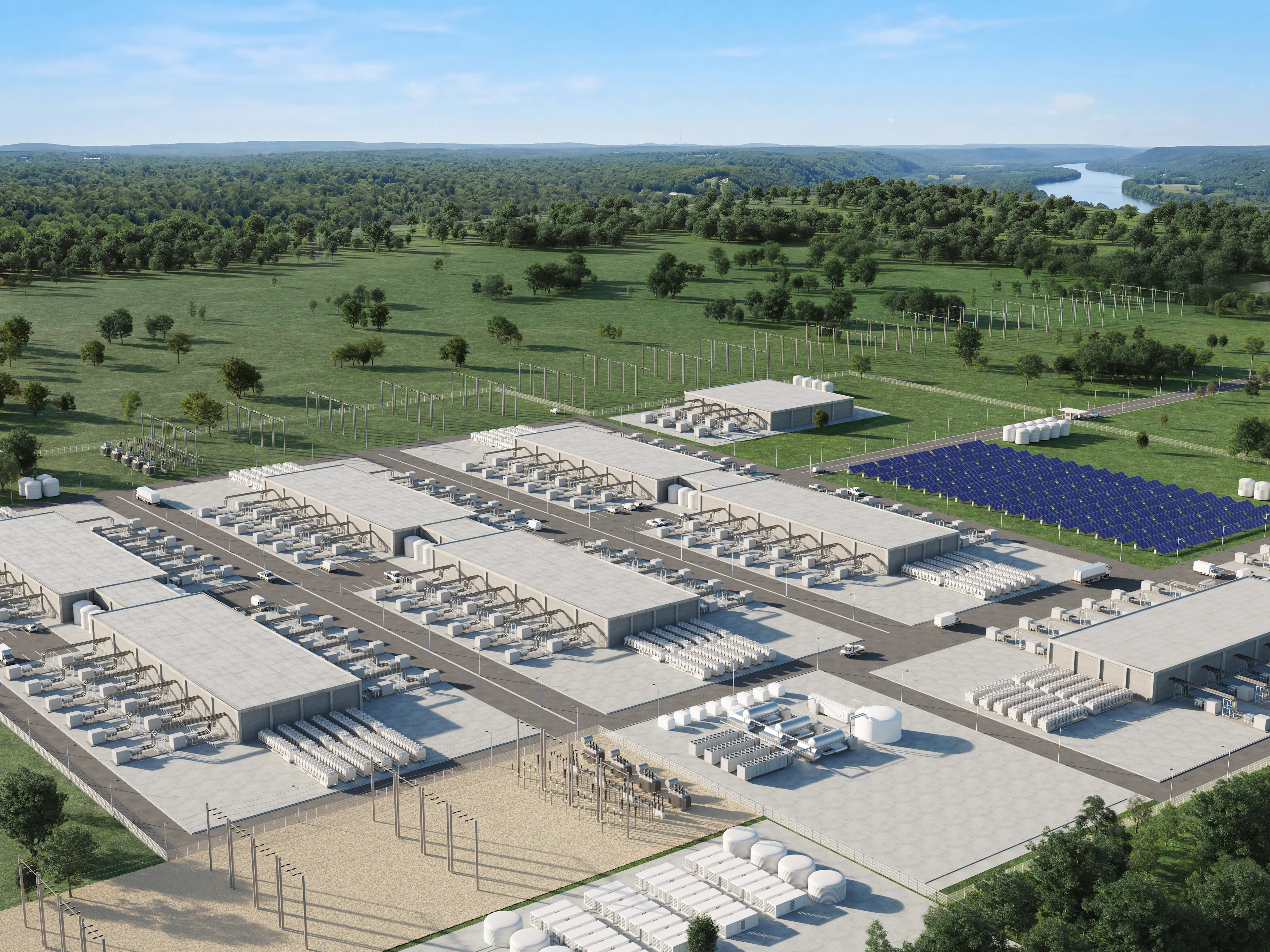
For behind-the-meter applications, power is generated or stored by an on-site infrastructure, such as a gas turbine or MV battery energy storage system (BESS), and then distributed from a private substation throughout a data center campus.
A typical grid connection would be a 1–3 mile tie line from the nearest utility substation or switching yard within a power intensive industrial complex, like a data center. At 34.5 kV, a VEIR ST conductor assembly can deliver >200 MW in an approximately 6-inch diameter cable with negligible resistive losses to achieve:

5× Less Excavation
Reduces civil work complexity by eliminating >5X the volume of excavation

3–6 Months Faster
Allows projects to be completed 3 - 6 months faster

50% Less Materials
Provides sustainability benefits through >50% reduction of concrete, backfill and copper

No Concrete or Thermal Fill
Eliminates need for concrete/thermal fill required for cable ducts

50% Lower Costs
Drives down CAPEX and installation costs by up to 50%
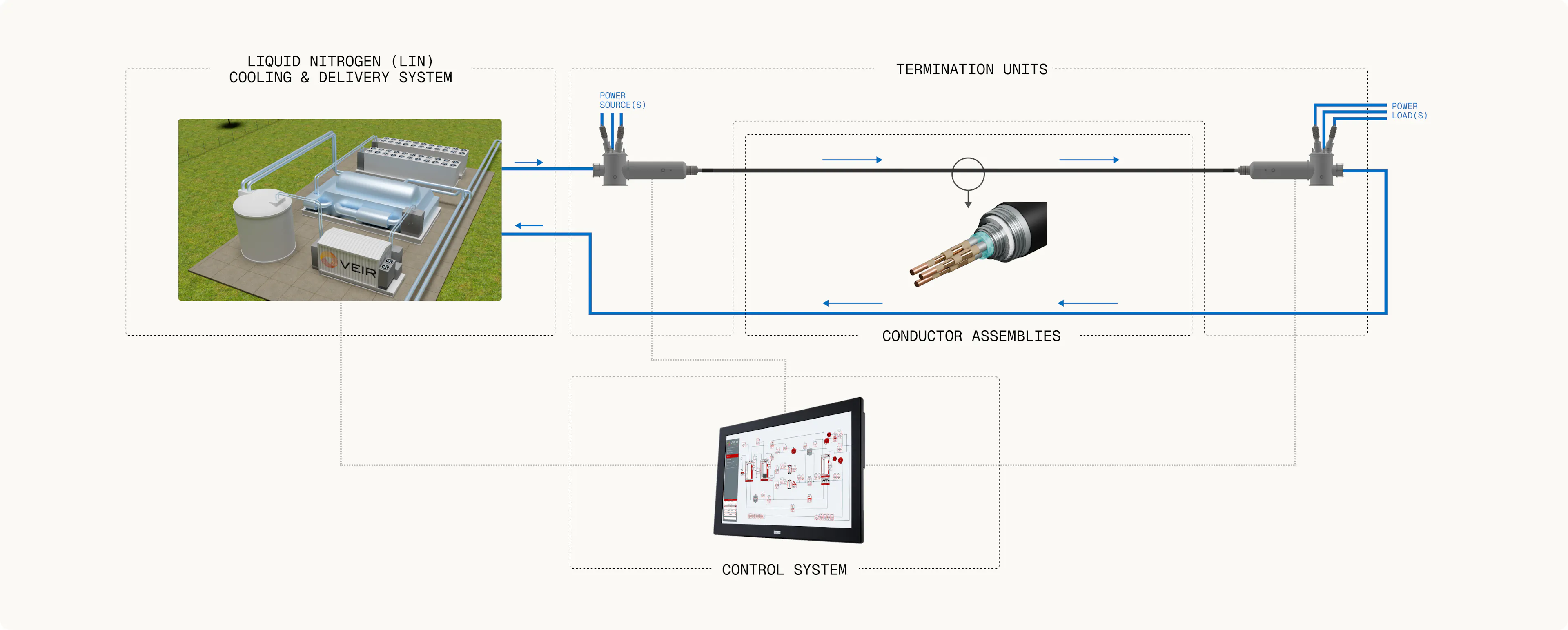
ST Series shares the same four-component architecture as the SL Series.
- 01Superconducting conductor assembly (cable)
- 02Termination units
- 03Liquid nitrogen (LIN) cooling system
- 04Operations / maintenance control system
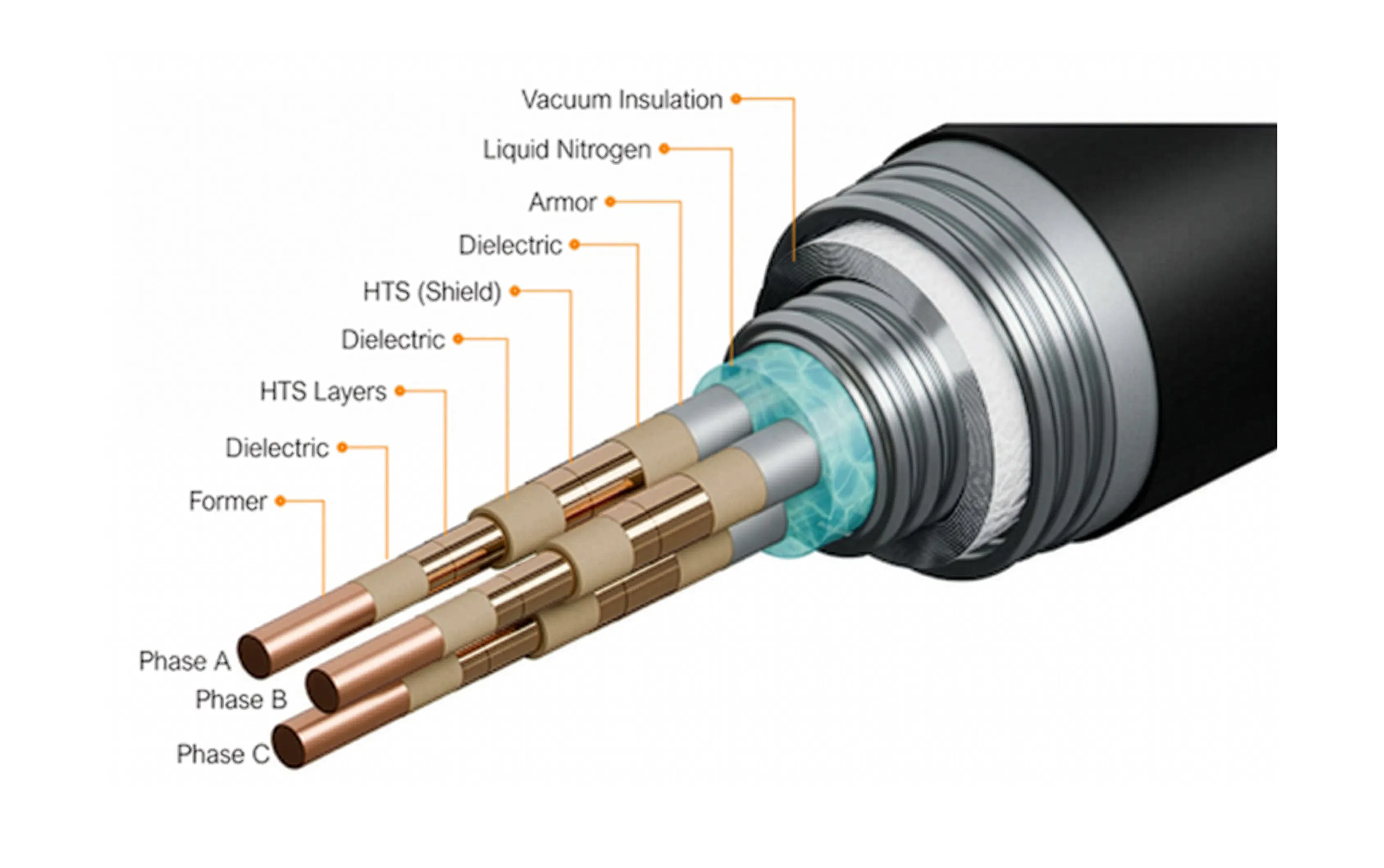
Together, these components can deliver over 200 MW of power in a single 6-inch diameter superconducting conductor assembly which carries high current with negligible resistive losses over long distances. With a self-contained cryogenic environment, the superconducting cable is not impacted by ambient temperatures and therefore does not require special spacing for thermal cooling in underground installations. The ST Series conductor assembly differs from the SL in that it uses a multi-core design as shown below with each core carrying a single phase. As the voltages increase above standard distribution levels, the architecture will shift to a single phase per conductor assembly.
Termination units bridge the electrical and thermal transition between ambient MV infrastructure and the cryogenic superconducting cable. These terminations are designed to be installed outdoors for connections to standard switchgear in substation switchyards and could also feed indoor switchgear through an underground vault below the assigned panel. Typical underground cable pulls do not exceed 400 meters, the joints provide the interface between cable segments and a location point for monitoring the health of the system.
The liquid nitrogen (LIN) cooling system pumps and refrigerates the LIN to ensure the proper flow and cryogenic temperatures are maintained for superconducting operation.
For distances of <=2 miles, a closed-loop LIN architecture similar to the SL series will be implemented. For longer distance projects in the future, VEIR will use its patented evaporative-cooling approach to extend cable lengths to 10 miles or beyond. The control system monitors the temperatures, pressures, flow rates, etc. of the system, executing automated protective responses to thermal excursions, loss of cooling and electrical faults.
At the campus scale, AI facilities are increasingly planned in tens to hundreds of megawatts, with some roadmaps extending toward gigawatt class “AI factories.”
As a result, power delivery, rather than compute or cooling, is becoming a primary constraint on data center scalability. Behind-the-meter medium-voltage (MV) corridors connecting data center buildings to the HV-to-MV substation(s) or onsite generation are being pushed to their practical and economic limits.
Access to power continues to constrain the timelines for data center deployments. Campuses with >200 MW IT loads require high voltage (230 - 345 kV) tie lines to deliver the necessary power which results in siting and permitting delays. Using the ST series, existing distribution voltage right-of-ways can be utilized to deliver 100 MWs of power, accelerating IT revenue by months if not years.