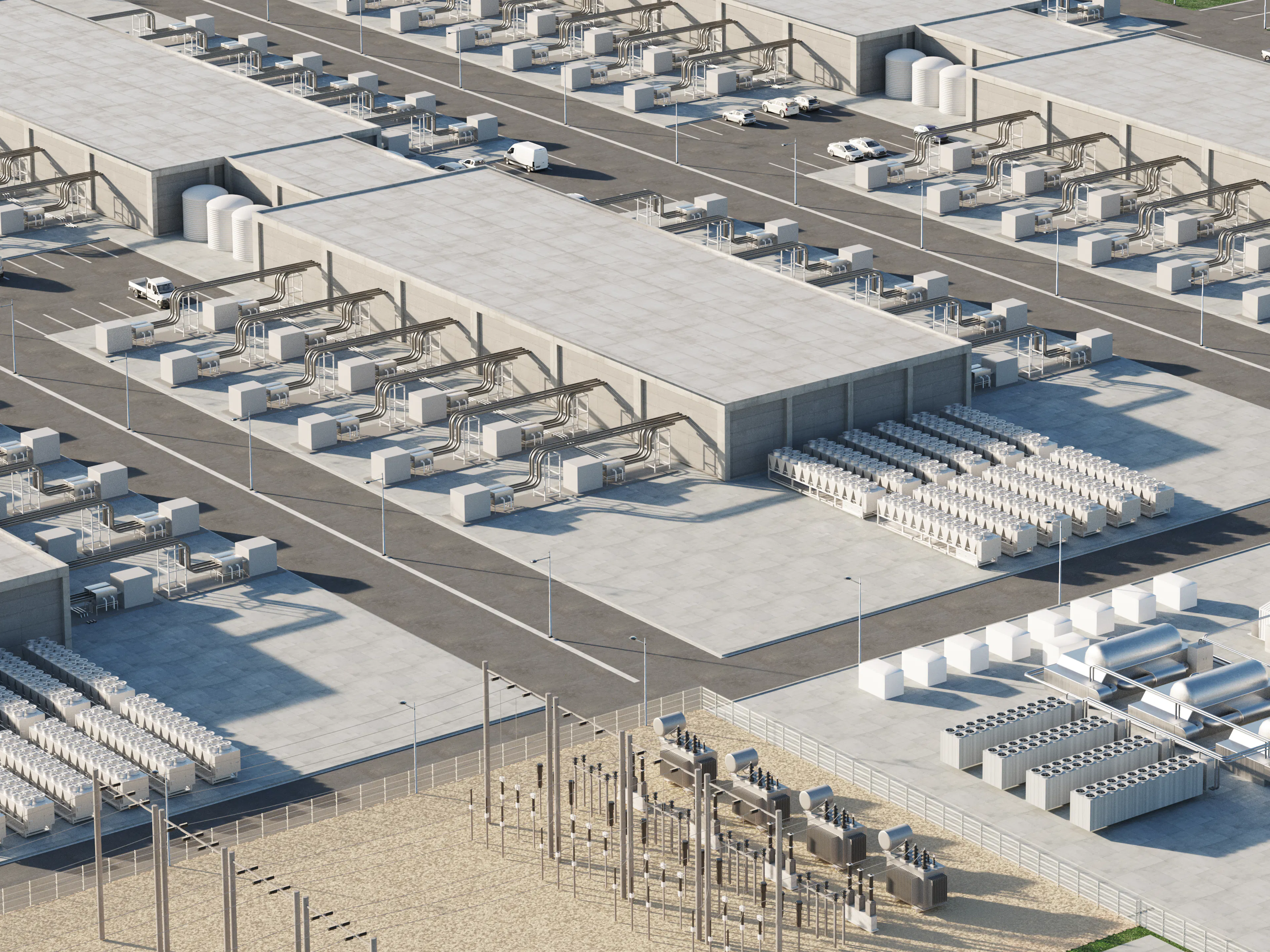
Superconducting Reference Designs for Data Centers
A data center reference design is an engineered baseline that project teams adapt to their own site. It defines the layout, equipment, and performance attributes up front. Owners, engineers of record, and EPCs can then agree on capacity, redundancy, and cost earlier and reach detailed design with fewer engineering hours.
VEIR’s reference designs are the first in the industry to bring that approach to superconducting power delivery. Each covers the full power path from transformer to white space, including site-level heat rejection for the IT load and liquid nitrogen plant, and benchmarks it against a conventional copper design. VEIR defined the scope and superconducting integration, and Jacobs Engineering Group engineered each design.
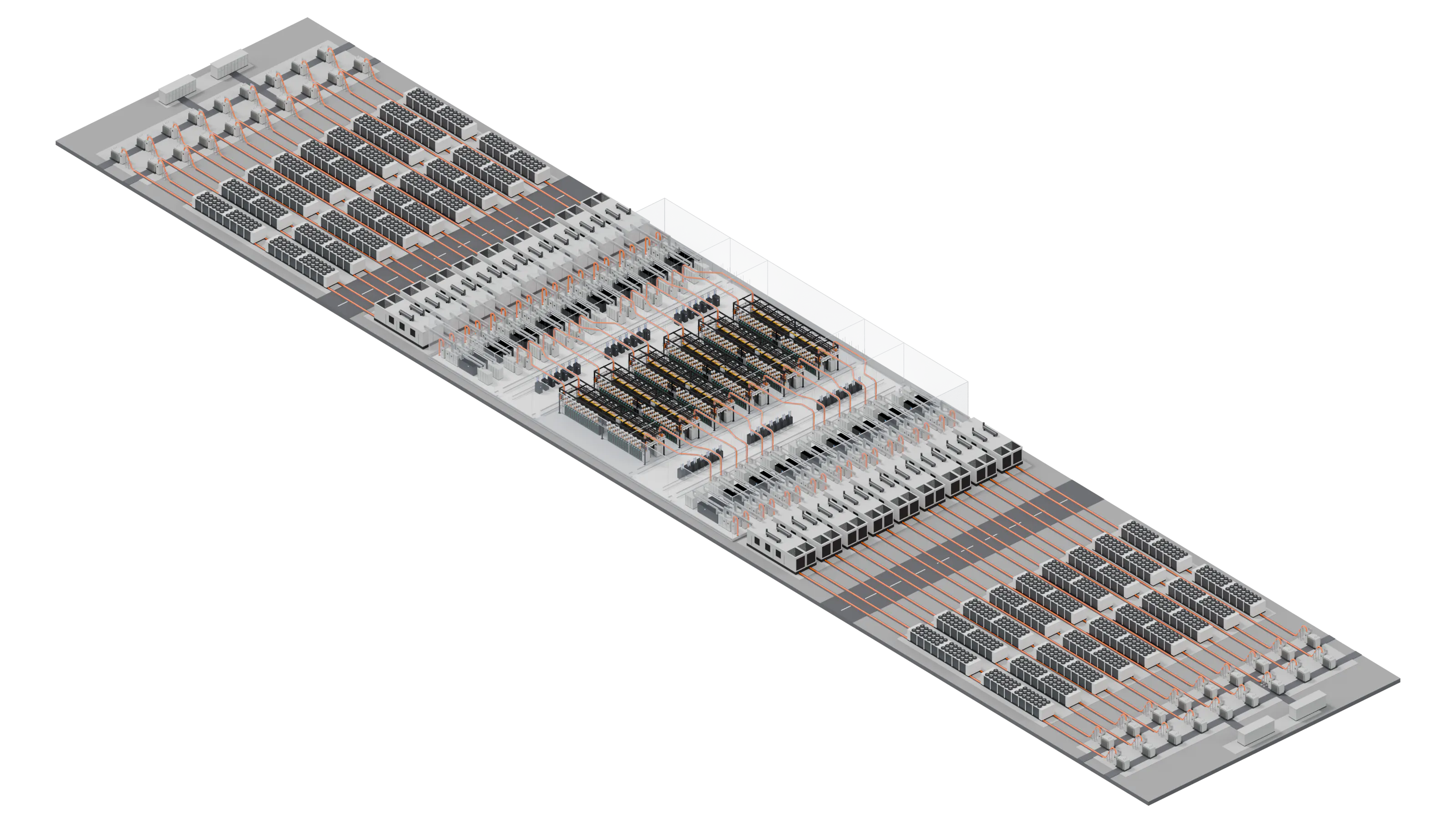
Superconducting Reference Designs for Data Centers
A data center reference design is an engineered baseline that project teams adapt to their own site. It defines the layout, equipment, and performance attributes up front. Owners, engineers of record, and EPCs can then agree on capacity, redundancy, and cost earlier and reach detailed design with fewer engineering hours.
VEIR’s reference designs are the first in the industry to bring that approach to superconducting power delivery. Each covers the full power path from transformer to white space, including site-level heat rejection for the IT load and liquid nitrogen plant, and benchmarks it against a conventional copper design. VEIR defined the scope and superconducting integration, and Jacobs Engineering Group engineered each design.
Superconducting Reference Designs for Data Centers
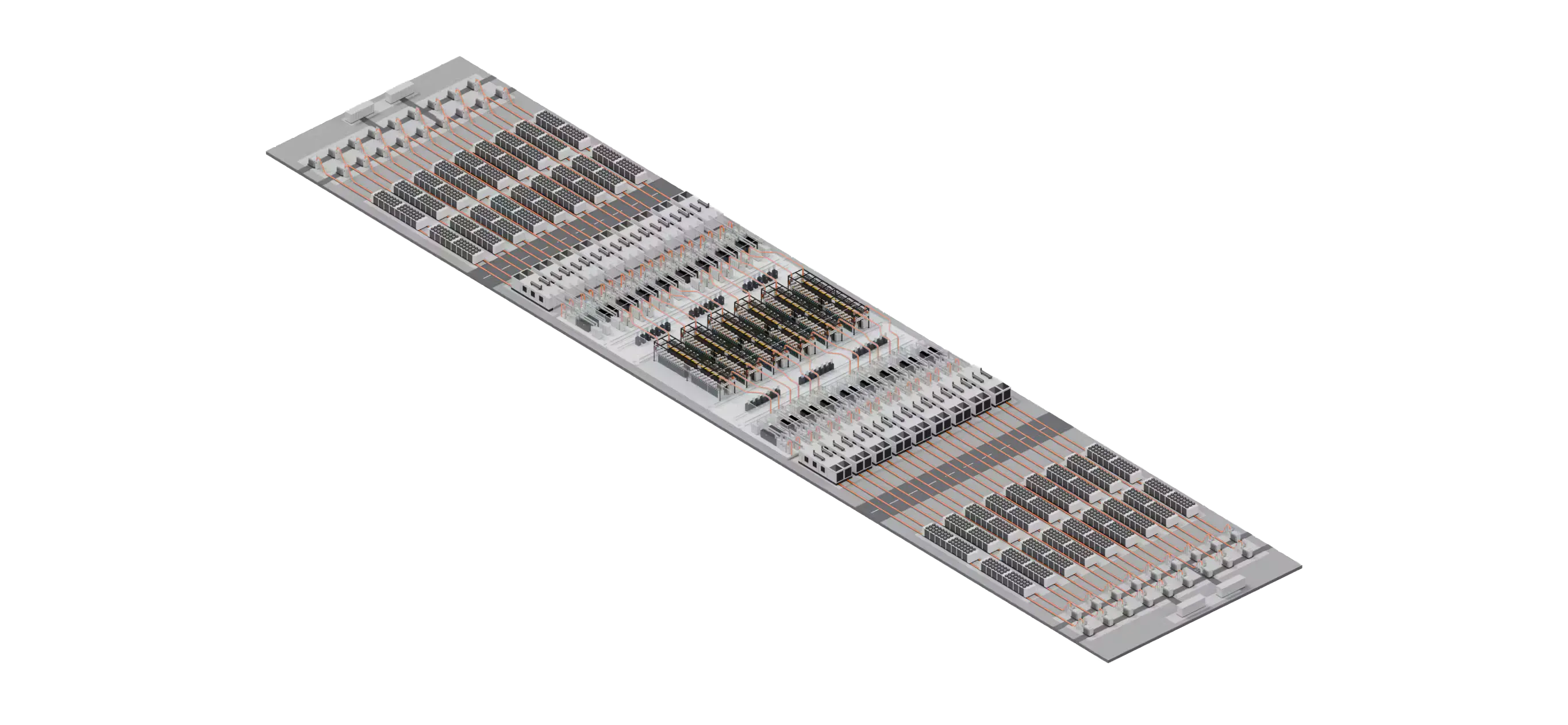
A data center reference design is an engineered baseline that project teams adapt to their own site. It defines the layout, equipment, and performance attributes up front. Owners, engineers of record, and EPCs can then agree on capacity, redundancy, and cost earlier and reach detailed design with fewer engineering hours.
VEIR’s reference designs are the first in the industry to bring that approach to superconducting power delivery. Each covers the full power path from transformer to white space, including site-level heat rejection for both the IT load and the liquid nitrogen plant, and benchmarks it against a conventional copper design. VEIR defined the scope and superconducting integration, and Jacobs Engineering Group engineered each design.
Proven Design Practice, Reengineered for Superconductors
For each reference design, Jacobs first engineered a conventional copper baseline using the materials and methods found in today’s AI data centers. The superconducting design holds the same criteria and replaces selected copper feeders with superconducting feeders, so the comparison isolates what superconducting power delivery changes on a project. In the long-feeder designs, the transformers move away from the building, showing a layout that copper’s voltage drop makes impractical.
Each reference design summary covers:
• Basis of design and system specifications
• Electrical architecture and redundancy
• Thermal system, including the liquid nitrogen plant
• Controls and BMS integration
• Results against the copper baseline